
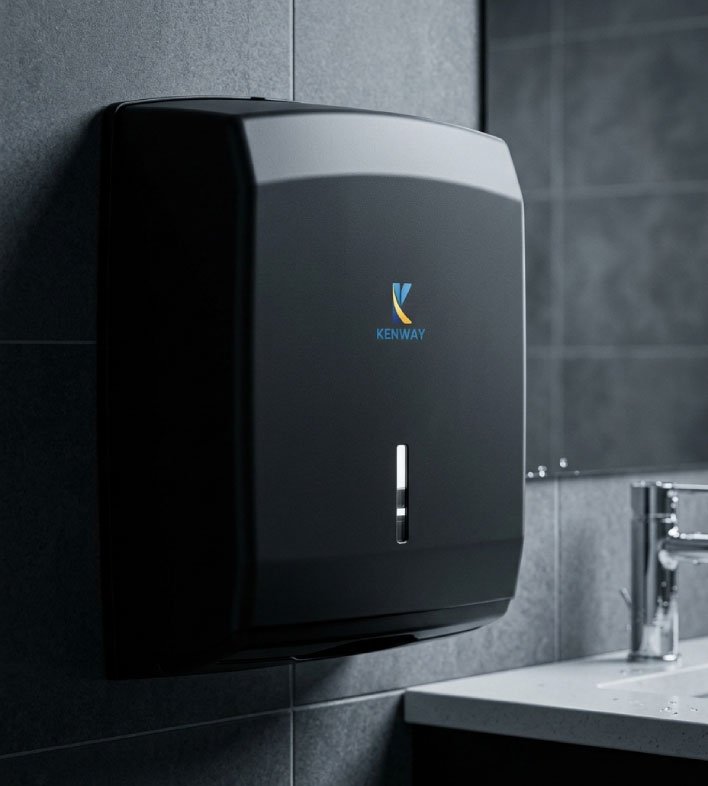
Automated Hygiene Dispensers – Engineering Cleanliness in Public Facilities
Introduction
In high-traffic environments such as airports, hotels, and luxury restaurants, maintaining flawless hygiene standards is a monumental operational challenge. The frontline defense against cross-contamination relies heavily on automated hygiene dispensers. From touchless soap and sanitizer units to automated paper towel and toilet roll dispensers, these devices are marvels of commercial facility engineering, designed to optimize public health while minimizing waste.
Sensor Technology and Actuation
The core engineering component of a modern automated dispenser is the infrared (IR) sensor system. These devices operate using either active or passive infrared technology.
Active IR Sensors: These emit an invisible beam of infrared light. When a user places their hands beneath the unit, the hand reflects the light back toward a photodetector.
The Control Circuit: Once the reflected light is detected, the microchip inside the unit triggers a mini-motor or a solenoid valve.
Mechanical Actuation: The motor drives a small peristaltic pump or a gear system to deliver a precise pre-measured volume of liquid soap, foam, or a specific length of paper towel.
Smart Dispensers and Internet of Things (IoT)
In large-scale facilities like international airports or corporate bank headquarters, manually checking hundreds of soap and paper dispensers is highly inefficient. Modern facility engineering has introduced IoT-enabled dispensers. These smart devices are equipped with wireless modules (such as Wi-Fi or Bluetooth) that transmit real-time data to a centralized facility management dashboard.
The system alerts maintenance crews immediately when a dispenser’s battery is low or when the soap or paper towel levels drop below 15%. This predictive maintenance ensures that amenities are never empty, greatly enhancing the user experience.
Sustainability and Cost Efficiency
Beyond convenience, automated dispensers are engineered for environmental sustainability. Manual pump dispensers or open toilet paper rolls often lead to massive product wastage due to user overconsumption. Automated paper towel dispensers feature adjustable internal settings that allow facility managers to control the exact length of paper dispensed per cycle and introduce a “delay timer” to prevent users from instantly pulling multiple sheets. By switching to controlled, touchless dispensing systems, commercial facilities typically report a reduction in paper and liquid soap consumption by 30% to 40%.
Add a review
Your email address will not be published. Required fields are marked *